

Wimbledon's Final Survivors
Muchova and Noskova, both on the brink here, play for the title

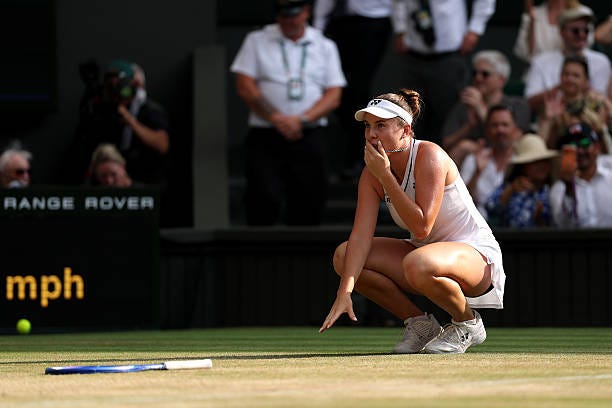
WIMBLEDON -- Andre Agassi likes to say that one of the best things about tennis is that you cannot run out the clock.
A lead is certainly better than a deficit, but there is no protecting it. No parking the bus in your half of the field. No dropping to one knee after the snap from center. Not even any laying up and going for the green in three with a three-shot lead.
You have to stay all in, focus on the micro, ignore the macro and seize the moment if and when it finally arrives.
This year’s new-look Wimbledon women’s final is the latest reminder. Linda Noskova and Karolina Muchova were both just one point — one shot! — away from elimination. Either could have been far removed from the well-tended grass and roaring crowd of Centre Court this Saturday.
Perhaps they would have watched on a distant screen while sipping their coffee and chatting with a friend or perhaps they would have checked the score on their phone as other women played for the shiny Venus Rosewater Dish. Or perhaps they would not have checked the score at all, the memory of a missed opportunity too fresh.
But tennis, maybe even more than everyday life, is full of twists, and instead, each will play her first Wimbledon final with a chance to win her first Grand Slam title.
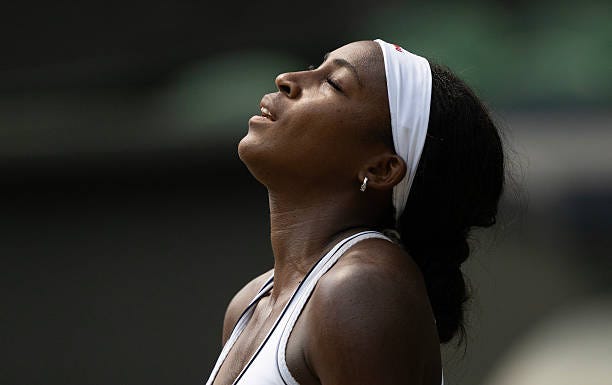
Sorana Cirstea and Coco Gauff will be the ones sipping their coffee or making other plans.
Last Saturday, Noskova was down 4-5 and ad-out to Cirstea in the third set of their third-round match on Court 3. Noskova took a deep breath, exhaled and missed her first serve into the net. She then kicked her second serve wide to roughly the same spot where she had double faulted two points earlier. This delivery landed in play, and she got a manageable return, took command of the exchange and soon got a short ball that she pounded crosscourt with conviction. Cirstea’s lunging one-handed backhand went sailing far out of play.
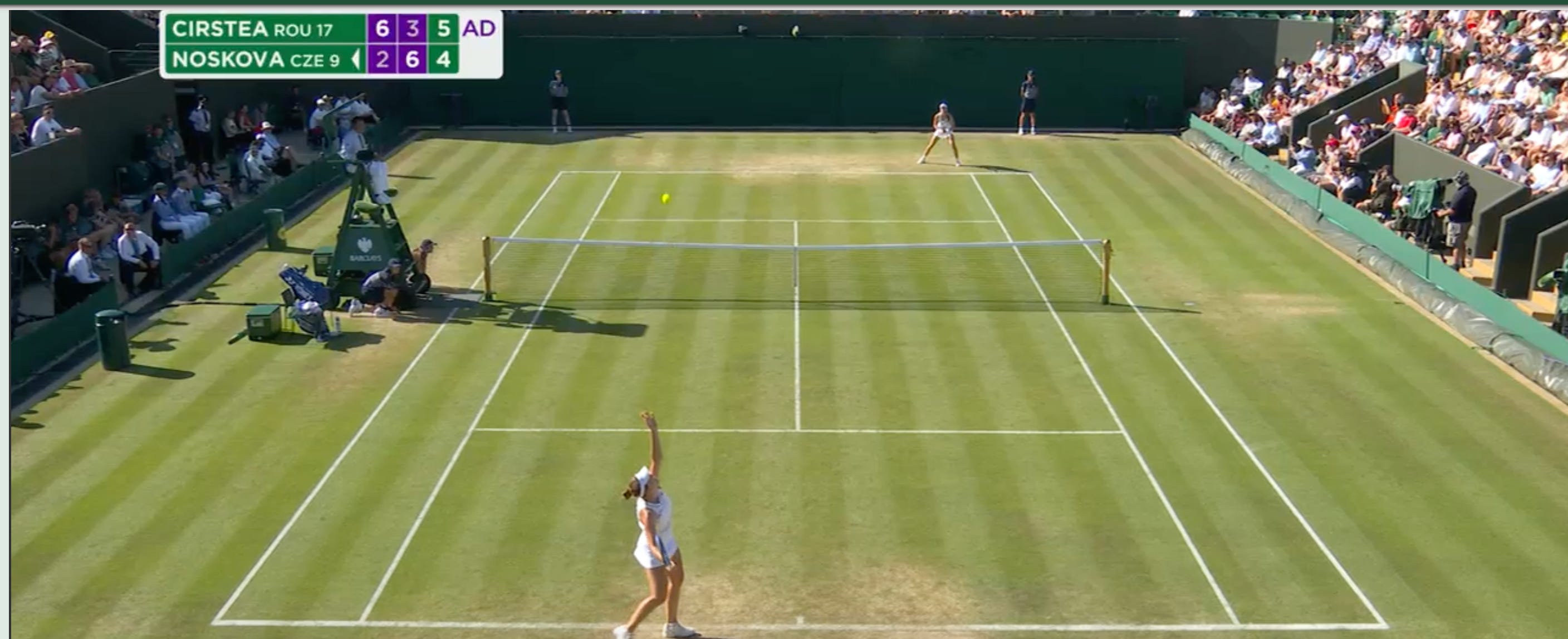
Match point well saved, Noskova calmly turned, clenched her fist and went on to hold. There were more twists ahead. She broke Cirstea in the next game, failed to serve out the victory or convert her first three match points, but at 10-9 in the decisive match tiebreaker, she ripped a backhand return crosscourt that Cirstea could not handle.
Noskova screamed and dropped to her knees, head bowed with both hands on the grass.
The 36-year-old Cirstea, playing what she says is her final season, was out of Wimbledon. The 21-year-old Noskova was still in and has not dropped another set: beating Madison Keys, Elise Mertens and on Thursday, in the second women’s semifinal on Centre Court, Marta Kostyuk by the no-nonsense score of 6-4, 6-4.
By then, Muchova already had escaped. She and Gauff played first in the heat on Thursday, and despite Muchova’s stronger start and fabulously complete game, Gauff beat her to match point.
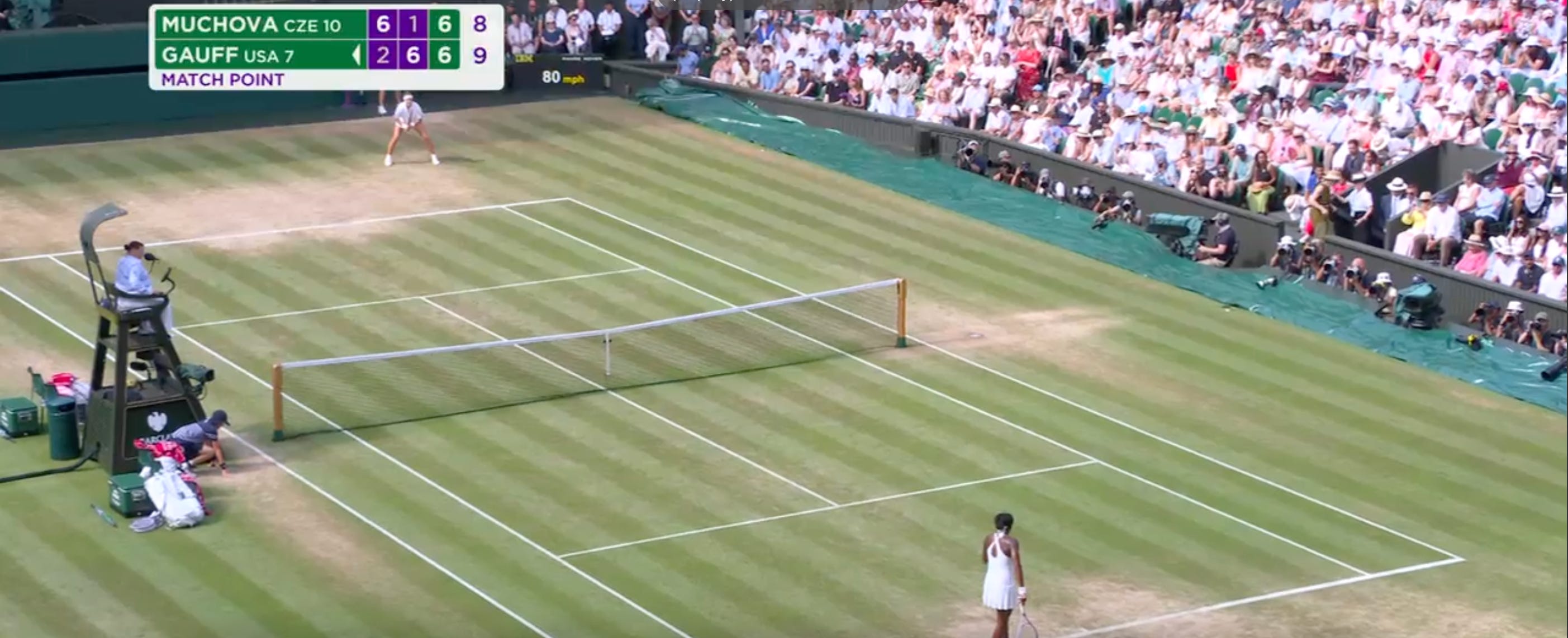
It was 9-8 for Gauff in their decisive match tiebreaker, and despite double faulting (by a lot) just three points earlier, she pounded a big first serve down the T. Many would not have been able to return it, but Muchova, one of the best athletes in the game, lunged right and put it back into play. And yet her desperation return landed short, very short, and Gauff closed in for what should have been the coup de grace.
She held her racket head high as if she were going to rip a forehand into open space, but suddenly there was indecision. Something in her regard changed, and she was very soon out of time. Instead of swinging freely, she tightened up and hit a stiff forehand drop shot that never had a prayer of clearing the net.
The Centre Court crowd gasped as one.
Rather than remain at the net to shake hands and celebrate her place in her first Wimbledon final, Gauff had to reverse direction, retrieve her towel, change ends and continue the struggle.
It was not so much the shot selection, even though subtlety can be harder to summon with so much on the line. But Gauff had hit winning drop shots earlier in the afternoon. It was the hesitation.
“Honestly, the return came back, like, in a tricky place for me,” Gauff said. “The bounce kind of caught me off guard. I just panicked a little bit.”
That gaffe will surely stay with her a while, no matter how grounded she sounded on Thursday afternoon.
But Muchova felt the strain as well when her moment arrived a couple of minutes later. It was 10-9 in her favor and she, too, made a first serve and moved forward to capitalize on a short return. She approached the net and had a forehand volley that she could have hit at a sharp angle for a winner. Instead she was not quite bold enough and allowed the speedy Gauff the chance to use her wheels and whip a forehand passing shot crosscourt. Muchova was ready to lunge for it but slipped as she pushed off and could only watch -- with a thin, world-weary smile -- as Gauff’s winner landed on the grass behind her.
The Centre Court crowd gasped again as one.
Rather than remain at the net to shake hands and celebrate her place in her first Wimbledon final, Muchova had to reverse direction, return to the baseline and continue the struggle.
“Honestly during that tiebreak, it was like kind of a rollercoaster emotionally for me,” she said. “One point I felt good. I hit a nice winner, and then I did like a terrible mistake.”
The winners were often very nice, including a diving volley that left Muchova’s prone on the grass earlier in the decisive tiebreaker and a topspin lob that had got her to that first match point.
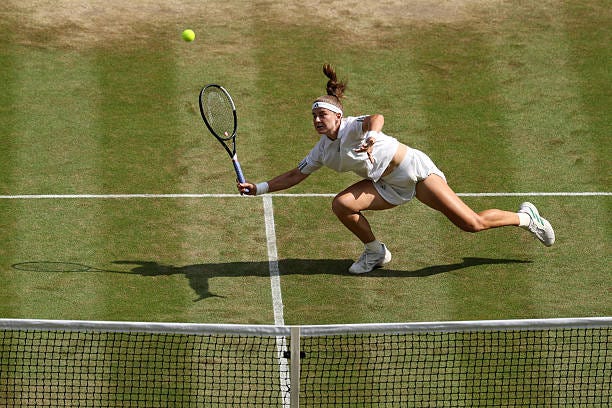
So what was coming next? Who knew at this stage?
Muchova was in discomfort and had been pressing repeatedly on her abdomen as if she had pulled a muscle (she later said it was because she was winded). But in the midst of the stress, the deflation and the absence of deliverance, she at least had a coherent philosophy.
“I was telling myself if I’m going to lose this, I want to lose on my own terms,” she said. “My terms is going forward, playing aggressive, going to the net.”
She attacked on the next point, running Gauff corner to corner and pouncing on her short replies and finally hitting a forehand inside-out winner as Gauff slipped on the grass trying to change direction.
It was match point number two for Muchova and after Gauff put her second serve in play, Muchova dictated terms again as Gauff’s counterpunches lacked the necessary depth.
Muchova’s final shot, a backhand, went down the line and Gauff’s final shot, a running forehand, went into the net.
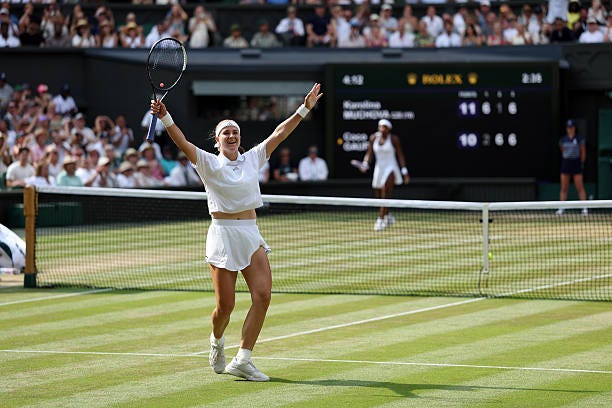
End of suspense. End of classic match, or at least classic third set.
Beginning of Muchova’s second attempt to win a Grand Slam final. She lost the first in Paris in 2023 in another three-set thriller to Iga Swiatek, still the queen of clay at that stage. But Muchova’s opponent this time will not be an established champion. It will be her young Czech compatriot Noskova, eight years her junior, who was also her Olympic doubles partner in Paris in 2024.
Until now, Noskova had not been past the quarterfinals of a major and until Thursday morning, she, like Muchova, had never set sneaker on Centre Court. They crossed the threshold to hit together before their semifinals, to familiarize themselves with the closest thing tennis has to a temple: with its dimensions and sightlines and its unique atmosphere. Noskova had never even been there as a spectator.
“I was not watching a lot of tennis as a kid, but one thing I do remember is when Petra Kvitova won her Grand Slam here and that was maybe one of the first moments that I knew such a sport exists,” Noskova said.
Kvitova, a powerful Czech lefthander who retired last year, won Wimbledon in 2011 and 2014 when Noskova was 6 and 9.
They are now linked more profoundly as part of the ever-extending line of Czech women to thrive at Wimbledon. Martina Navratilova, born and raised in the former Czechoslovakia, defected to the United States in 1975 during the Communist era and was stripped of her Czechoslovakian citizenship. She went on to win the Wimbledon singles title a record nine times, with her first two victories coming in 1978 and 1979 against her friendly rival Chris Evert.
Navratilova, who became a US citizen in 1981, told me today that she still felt like a Czech player during those early Wimbledon victories. “The first two for sure,” she said. “I didn’t really give up the citizenship. They took it away.”
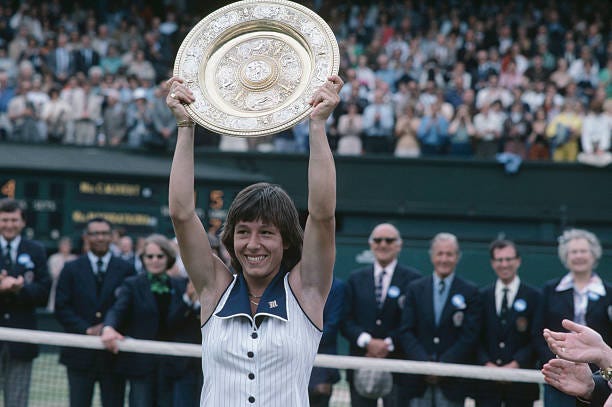
Czechoslovakia split peacefully into Czechia and Slovakia on December 31, 1992: the so-called “Velvet Divorce”. But the Czech women have continued to thrive at Wimbledon with Jana Novotna, Kvitova, and most recently, Marketa Vondrousova and Barbora Krejcikova winning the singles title.
A new member of the club is guaranteed, and though Navratilova defeated Czech player Hana Mandlikova in the 1986 final, Navratilova was representing the USA. This will be the first Grand Slam singles final between two women representing Czechia.
Muchova, 29, sounds weary of questions about Czech tennis success, which has much to do with the quality of coaching in the small country. Noskova, newer to the tour and the topic, is more eager to dive in.
“It’s a tradition at this point,” she said. “We are very creative, I would say, so grass allows us to kind of use any side of tennis. If it’s serve and volley back in the old days. If it’s slices and volleys in this new era. I would say that we have all these sides that we can use. The grass allows us that, and it’s showing.”
Tradition only gets you so far. Look at what’s happened to Swedish tennis since the glory days of Borg, Wilander and Edberg. But the Czechs have shown remarkable staying power, and Vondrousova, Krejcikova and Muchova are all players with true variety.
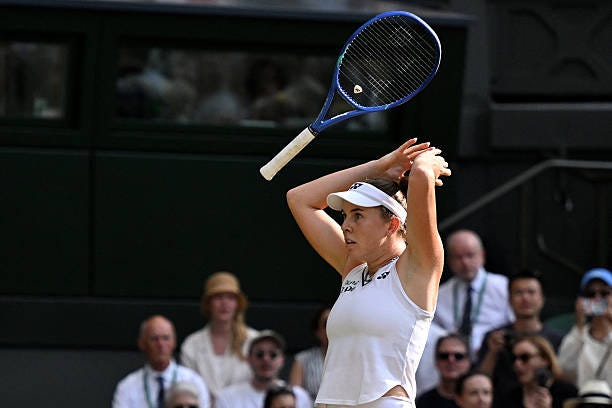
Muchova has punch from the baseline but also uncommon touch and a yen for the net. She uses the full tennis canvas, no matter what the surface. Noskova is more efficient than elegant but she can apply big pressure by striking the ball consistently from inside the baseline, and she, too, possesses plenty of tactical flexibility with her strong net game. Her serve has been her biggest weapon here and left Kostyuk, one of the game’s better returners, off balance and off rhythm for most of their semifinal.
There are more powerful serves on tour (see Gauff, Keys, Naomi Osaka etc.), but Noskova has been hitting her spots beautifully at Wimbledon, winning 86 percent of her service games, 74 percent of her first-serve points and 54 percent of her second-serve points. Those are all well above average for the tournament. But the most telling number, in a game often ruled by returners, is that 39 percent of her serves have not been returned at all.
“I have been working on my serve for a couple of years now,” she said. “It has been a great help for me lately. Obviously on a grass court or hardcourts you can use your serve as the most powerful tool.”
This final is a surprise but not a shock. Noskova came in ranked No. 12 and has won more singles matches on grass than any woman the last two seasons. She and Muchova are both 11-1 on the surface this year and won grasscourt titles in the leadup: Noskova in Berlin and Muchova in Bad Homburg.
That has rarely been the modern route to a title at the All England Club. The last woman to win a warmup event on grass and then win Wimbledon was Maria Sharapova in 2004. This will be the first Wimbledon final between women who have both won a grasscourt tuneup since Navratilova beat Zina Garrison in 1990 (that was my first Wimbledon, which tells you how long ago it was).
Whoever prevails on Saturday, women’s tennis will have another new major champion, and its 10th different Wimbledon champ in the last 10 editions.
The better-known Muchova will surely be the crowd favorite. She would be a popular winner with her eye-catching game and poignant, injury-filled pathway to success. Last year, she was still obliged to hit one-handed backhands to avoid damaging her fragile left wrist.
She deserves to be the favorite on Saturday, but, for me, only a slight favorite. “Noskova is very solid,” her coach Sven Groeneveld told me. “A very dangerous player.”
One who, like Muchova, knows that her Wimbledon could so easily have been over before the final, and one who knows, better than ever, that in tennis there is no running out the clock.
Coffee anyone?
CC
Czech tennis has always been unusually strong for such a small country ever since Karel Kozeluh became one of the first touring pros in the 1920s along with Vinnie Richards, later joined by Tilden. There have been so many great Czech tennis players male and female since then. Names like Drobny, Lendl and Navratilova are only but a few of them. I would have thought Drobny was the greatest Czech male, but some Czech tennis coaches told me in 1983 that Kozeluh used to beat Drobny's brains out!! My high school tennis coach in New Orleans, Franicis Soyka, had played on the Czech Davis Cup team in the 1920s. Muchová is long overdue to win a major in my book, as I've always been impressed with her purposefulness, her quiet maturity, and her game, and I think she's the heavy favorite tomorrow. Whoever wins, they should play Bedrich Smetana's "The Moldau," which I think is sort of the Czech national anthem. It's gorgeous music, deeply rousing and stirring.
Spot on.
Lovely, lovely, piece.
Sat through it all and hadn't realised quite how much I had missed.
One can look, but one cannot always see.
Thank you for filling in the gaps Mr. C.