



NEW YORK — Rajeev Ram had staying power. A former junior standout from Carmel, Indiana, he spent an NCAA championship season playing under coach Craig Tiley for Illinois and then turned pro in 2004. Twenty-two years later, he has just retired, at age 42, as one of the best doubles players in the world. He won six Grand Slam titles, including three US Opens in a row from 2021 to 2023 with partner Joe Salisbury. They reunited this year and reached the US Open semifinals after which Ram gave a touching retirement speech on court on Thursday in which he choked up speaking of his late father, who taught him the game. “I hope I made you proud dad,” Ram said.
He surely did.
Ram and I spoke twice in depth in 2024: once from Paris and once from New York. In my recent New York Times story, he talked about his US Open run with Salisbury and the pain of falling just short of gold at the Olympics. For Tennis & Beyond, we went in depth on many topics, and with Ram going deep again this year at the US Open with Salisbury in Ram’s final tournament, I am reposting our interviews, which explore the art of doubles and tennis longevity and his close connection with his father.
On playing Davis Cup in China a couple of days after the 2024 US Open:
It's insane, to be honest. That's the best way to put it. The fact that we're going to China to not even play China, is ridiculous and feel free to quote me on saying that. I feel like this new format has its good and its bad, and you can argue it both ways. But this is a step past that, to go to a place where we are not even playing a team from there, wherever there might be. The fact that it's halfway around the world is a little insignificant. I feel like it really takes away from what Davis Cup is all about, which is playing in front of or against a home crowd. I realize with this new format when we had the groups in a single place that would only happen once, but at least it would happen once. But four teams that aren't China playing in China? It doesn’t make any sense.
On not being picked for the knockout round of the Davis Cup Finals by former captain Mardy Fish in 2022 when Ram was the No. 1 doubles player in the world (the US team lost in the quarterfinals):
The biggest problem I had with that situation was actually not that I didn't get selected, because at the end of the day, that's not my choice. That's the decision of the captain, and if he feels like I'm not the best option regardless of my ranking or my results, that's what he's there for. The thing that I had the biggest problem with, and the reason I feel like we didn't do very well, is because we didn't take a complete team. That's something I'm honestly still probably not over, because I worked my butt off to try and help us get to the stage of qualifying for the final. I went to Scotland the day after winning the US Open and was part of winning a crucial match against Britain to get us through. And then we go to the Davis Cup finals, and you can take five guys on the team, and our captain chose to take four. That, to me, is not trying your hardest, and I don't really have any time for not trying your hardest, and I think that's a big problem. Do I think I should have been picked? Yeah, I do. That year, we had three players competing in the World Tour Finals. We had Taylor Fritz, Austin Krajicek and myself, and we left two on the bench. I don't think any other country would have done that.
On whether Fish or anyone from the USTA eventually apologized:
Mardy's blocked me on social media, so I'm gonna say no (laughs). We've not had a conversation since that day. The USTA, I did have a chat with them. It wasn't so much of an apology. It was more of an explanation, saying that the captain has basically full autonomy. And I told them exactly what I told you that I just don't understand full autonomy to not pick a full team. And we sort of disagreed on that. The USTA didn't say, ‘Yeah, you're right. Sorry. We shouldn't do that, or we won't do that again.’ I didn't hear any of that, but it hasn't happened since. So I'm very happy about that.
On what it means to have become a big part of the US Davis Cup team since then under new captain Bob Bryan:
Davis Cup is one of the most important things in my career. I'm a little older, obviously, than most of the guys on my team. I grew up watching Davis Cup in I'm not going to say its absolute heyday, but in certainly a great time for it. It was always a massive goal of mine to be on a Davis Cup team and to compete for my country in this format. It's been something I've really strived for.
I will play for my country any time I’m asked and play with passion as hard as I can. I think our whole team did an amazing job of that in China and to be honest I think all the teams there did a great job. But I’m a big proponent of it being how it used to be where it’s home-and-away matches, and this wasn’t that for anyone.
On how he began playing tennis:
My dad grew up in India and played cricket as a kid. Then he was a scientist, a botanist by trade. He wasn’t a tennis player in the least. He started when I started really. I'm an only child, and he would come home from work, and tennis was our thing that we did together. We lived in California for a bit. Then we lived in Wisconsin, and we'd go to the local park, or when we got to the colder weather, we’d go to the local club: a small, little tennis club in Madison, and we'd just go there every day after he got home from work. It was like the highlight of my day. I always thought as a kid that he couldn't wait to get home to play with me. I'm sure he got some enjoyment out of it. But now, as an adult, I realize how difficult that must have been at times. But it wasn't to make me a professional. It wasn't to make me a good or great player. It was just what we did together that was a lot of fun. I tried every sport as a kid. I was a little better at tennis and enjoyed it more than the others, and so that was it.
On where his father Raghav got his passion for tennis:
I always thought that we kind of got it from each other. I think he loved the fact that his son found something that he loved so much. Whatever I did, I think my dad really wanted me to do it because I loved it, and to do it as hard, as best as I could, go at it full-on with 100%. I think he saw that in me for the tennis. It wasn't even so much about my level or my ability. It was just how much passion I had for it. I think him seeing that in me made it a lot of fun for him.
On beating his Dad for the first time:
I was about 11 years old, I think, when I properly beat him for the first time, and it went up from there quickly. But yeah it was a big day (laughing).
On why Ram serves like Pete Sampras:
I grew up in a time in the US when we had a bunch of great American players. My dad and I both took a liking to the way that Pete not only played, but carried himself and just went about his business. I liked how he’d come forward. Some of the things that I naturally did, he did great, and so it was kind of a fit that I was able to emulate, and that's how I developed, really, all of my technique, not just my serve: by watching and sort of learning and trying to play like he did in every capacity. I wanted to emulate not only his game, but his temperament and maybe his competitiveness to a certain extent. I wish I could emulate his athleticism, but that that was unfortunately, not in my DNA. With Pete’s speed and jumping ability and agility and all of those things. I think he gets very undersold for how great of an athlete he was. Looking at it as a person who loves tennis, I think that maybe one of the things that allowed him to be so great for so long is that even if he was having a bad day hitting the ball, he could rely on his athleticism to just get him to the point in the match where he could find his timing. I watched a lot of Pete’s matches. I also loved watching Boris Becker play, and Stefan Edberg, and all the Americans, Jim Courier and Andre Agassi and all of them. But yes, Pete was the bulk of it.
On why he has a one-handed backhand:
That was not all Pete. I was always a player who came forward. I was always a player who tried to be aggressive and come in, and so it seemed like most of the people who played that way had a one-handed backhand, and they had a good slice backhand. Remember, we're talking about the ‘90s here, when serve-and-volley tennis was really a thing, whether it was Becker and Edberg earlier, or a bit later with Pat Rafter and Tim Henman and a few others.
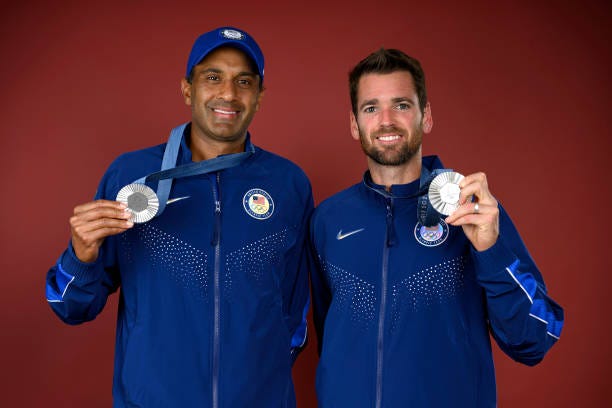
On the keys to his longevity when many of the peers he partnered with early like Brian Baker, Bobby Reynolds and Eric Butorac are no longer playing professional tennis:
I think I was always a person that peaked a little bit later. Whether it's jumping into the pro tour and jumping up levels, it sort of takes me a while to get to really feeling like I belong, or feeling like I'm totally comfortable. But I feel like my mentality has been the one thing that has kept me going, because my dad and my mom really instilled in me from a young age that tennis was not ever supposed to be a chore. It was supposed to be fun, even if it became my job. It was going to be serious, and I was going to do everything I could to be as good as I could, and take it as far as I could, but the minute I didn't enjoy it anymore was the time I should stop. So I feel like I always looked at it from that perspective, and I think a lot of the guys that stop, perhaps it becomes more of a mental thing than a physical thing. Obviously, not everybody. You mentioned Brian Baker, and he was one that was obviously hampered by injuries for quite a long time. We grew up together, and I remember him having his first knee surgery when we were, like, 12. So that was crazy to me.
But I think it’s my mentality of always looking to improve, always looking to get better, not thinking or bothering so much with the wins and losses but asking myself, ‘Am I enjoying this? Am I getting better?’ That's really the biggest win. I think that sort of mentality has been something that's kept it fresh and kept it enjoyable for me to keep playing to this point.
On becoming a doubles specialist in 2017:
I was a pretty good doubles player when I played singles. I was kind of always hovering around 30, 40, 50 in the world, but I knew that I wasn't good enough to be one of these guys that played singles full time and still won majors. There's a few of them out there, and I wasn't one of them. I felt like I had the skills to be one of the top doubles players, but I really had to work on it and take the time that it requires. So, I made that decision in the end of 2016. I had a super long year. I think I played over 100 matches in singles and doubles. I just felt like I didn't want to leave tennis without giving doubles a full shot, because I felt like I had something left to give there, and it turned out to be a decision that's really paid off. I think at the time I knew in my gut it was the right decision. So that was a big, big part of it.
On whether he would have envisioned playing eight more years at that stage:
To be very honest, probably not. I just kind of thought about it one or two years at a time. If you had told me that I was still going to be competing in the Olympics in 2024 I probably would have said that that's going to be hard. But I've been lucky and fortunate enough to have had a long career and stay healthy for the most part and still be playing at a pretty high level.
On how he stayed healthy for the most part and avoided any major injuries or surgery:
Obviously the technique. I think that helps me a lot. I've been able to play pretty smoothly and without putting too much stress or undue stress on the body. I also have been really aware of how important taking care of my body is in every capacity. It’s not only the stuff leading up to a season but during a season: how important the physio stuff is, how important the day-to-day maintenance stuff is. And I think just being aware of that and prioritizing that has been huge for me, because it's one of those things where injuries are strange. You feel okay. Then all of a sudden, you don't. You have something that kind of creeps up on you that becomes something major without knowing it. I think the best way to avoid any of those things is to get them before they even start.
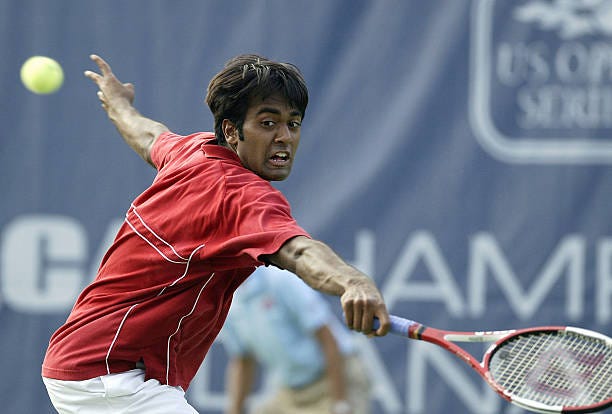
On his tips for younger players:
To be honest, I wish I had realized even sooner, but I think the biggest thing for me is making sure you don't overtrain and overdo it and that you prioritize the sort of day to day, quote, unquote, maintenance, boring stuff, like warm up properly, do all your mobility stuff before and after practices, even after losses. Just because you lose a match doesn't mean you didn't try as hard as if you'd won it. I see a lot of people, and I was one of these people who after I win, I do everything right, but after I lose, I don't even stretch or get a rub. I don't do anything right. In this business, unless you're one of a few people, you lose every week. So if you add all those times up where you lose and you don't take care of yourself, it adds up really quickly to potentially something catastrophic happening.
On when he started having more optimal routines:
I was probably about 30, maybe a little after that, so I wish I would have done that stuff a little bit earlier. I don't know what kind of difference it would have made, but I started paying attention a lot more when I started noticing things. You get to 30, and you start playing a lot of matches, and your body lets you know about it. You're not mid 20s, where you can just recover from anything. Stiffness would linger for days instead of hours. I realized also real quick that I'm not the best athlete out there. I'm not the physically most gifted. So if that's down even 1% it severely affects my performance. So I feel like I need to be as good as I can be, because as good I can be is still behind a lot of the guys I play.
On the 2024 Olympics, his third Games after Rio & Tokyo:
First of all, playing such a big event in an iconic venue where we play one of our four majors was pretty special. The other two Olympics I played. One was in Rio, which was great in its own right. One was in Tokyo, which was at a tennis venue, but it wasn't one of the majors, right? So playing in Roland, Garros, that place where we do have so many great memories both as players and tennis fans alike. I think it was really, really cool to have that. And then, just with the singles, to have Novak and Carlos Alcaraz, probably the two best players that were there, play for a title when it's definitely the only thing that Novak didn't have on his resume. So what an iconic, cool spectacle just for that. And for me to have played in an era where multiple players, but specifically him, have done what he's done, it's honestly incredible. I remember watching Novak play US Open qualies. How crazy is that? I remember watching him play a match against Paul Goldstein in the Australian Open (in 2006). It was first round, and Paul ended up beating him. You never would have thought that this guy could literally rewrite the history of tennis.
On the big crowds for doubles at the Paris Olympics:
The Olympics is a situation when everybody cares the same. Everybody has that intensity, whether you're singles players or doubles players, because you're playing for a medal. So yes we played (and defeated) Nadal and Alcaraz, and it was a packed house for a doubles match but an amazing thing for the sport and and an amazing thing for doubles. But then even in the final there were four guys that play doubles only on tour, and we’re playing that match in front of a full house, too. Really unfortunate that it didn’t go our way in my opinion, but it was a great match, and I think we put on a great show for a big crowd. I absolutely think it just shows you what can happen if doubles is put front and center in the right moment, in the right situation.
On the significance of the doubles players defeating the singles stars:
For some reason, there seems to be a narrative going around or a thought, that the best players in the world don't play doubles. I think it's incorrect, because the reality is that the best players, the best doubles players, play doubles on a weekly basis at all these big tournaments. That's not to say that if someone like Carlos or Jannik Sinner or Novak or whoever put the same effort, energy, dedication, time, and had the same desire as I do, that doesn't mean that they wouldn't be there. I'm sure they would be obviously. They're incredible athletes, incredible tennis players. But the reality is they don't. They put that into their singles, and that's where it shows. I feel like, for some reason, that narrative going around is well, if these guys played anytime, anywhere, in any capacity, they would be the best. I don't think that's the case. I think the guys that work at it day in and day out have something to say about that. And I think it was on display at the Olympics, because you had everyone there who cared as much as the next person trying to play. And we ended up with four doubles guys playing for the gold.
When Rafa won gold in ‘16 in Rio, his partner was, for me, one of the most entertaining doubles guys that I've ever played against. Marc Lopez was a phenomenal doubles player, a guy who didn't have the biggest weapons, certainly not the biggest serve, and not only survived but thrived in an era where it was really difficult. I think he was a big part of that Rio gold. And then, if you look at Tokyo, Mektic and Pavic from Croatia, who are for me one of the best teams of the decade, they won the gold without a whole lot of issue. If you look at 2012 in London, the Bryan brothers won that. So I understand Roger (Federer) and Stan (Wawrinka) won in 2008. You know, Roger Federer is Roger Federer. It absolutely can and will happen. But people tend to look at the superstars that win the doubles. It happens a lot where the doubles guys actually win the doubles when everybody plays. Same with Indian Wells, which is always a big hot spot for the singles guys to play. But if you look at who's won that tournament over the last five to 10 years, there probably are one or two singles teams, but there are quite a lot of the doubles guys that end up winning it.
On the skill sets beyond volleying that separate singles from doubles:
The toughest thing that I had to learn and get better at when I played only doubles was to become a great teammate. Because in tennis, we are individuals. We play singles. It’s you against me. No coaches, no, nothing, right? So all of a sudden, I'm basing my whole career, my livelihood, on not only me, but the guy next to me, right? One of my biggest jobs in doubles is to make sure I create an environment on my side of the net where my partner can thrive and can play the best he can possibly play. I give energy to him. I take energy from him when I need it. We sort of have this whole chemistry relationship thing going on, and that's not something that you can do just because you're pals, and you did it once or twice. It's something we genuinely work at over and over again.
Also like they say in other sports, it’s moving without the ball. Not every ball is your ball. You're sometimes having to create situations where you close some space or do some stuff, but you're not actually hitting the ball. You're poaching, or maybe you're not fully poaching. You're squeezing and making the space look smaller for the opponent. You've won the point without hitting the ball just because of your positioning, because of your understanding of angles, your understanding of speed and movement and all that. There's so much more to doubles than just hitting the tennis ball back and forth. I'm not saying that's all there is to singles, but there's so much more that isn't there in singles that I had to really pay attention to and learn how to get good at if I wanted to be really good in doubles.
On what it meant to win his first Grand Slam title - an Australian Open mixed doubles win with Barbora Krejcikova in 2019 — when his father was still alive ( he died later that year of pancreatic cancer):
A massive deal. It's one of those things that you kind of never think about until it happens, right? My dad was sick for about a year and a half, and it wasn't something that anybody wants to be sick with. I know for a fact I wouldn't be here doing this if it wasn't for him and the effort that he put in. We love tennis. We love the history of it, and for him to actually see me hold a major trophy and for me to be able to bring it home and to have him hold it was pretty awesome. I think a lot of the things that I've been able to do after that have all been in a way, to remember him and to commemorate his effort with me, and his love for me and our sort of mutual love. I think everything that I have been able to accomplish, whether it's the men's doubles Slams, or being number one in the world have meant a lot because I knew I wouldn't be able to do any of it without him.
He gave me the option to choose tennis or not to choose it. I think those are some of the things that Andre (Agassi) has talked about where tennis was not his choice sometimes. My parents made sure that tennis was always my choice no matter what. If I was 13 years old and I wanted to quit, great, quit. Just whatever you do, put yourself 100% into it.
On the greatest men’s doubles player he has seen:
I’m not gonna say anything about guys I didn't see like John McEnroe or the Woodies (Todd Woodbridge and Mark Woodforde). Unfortunately, John McEnroe was a fair bit before me. And the Woodies were just before me. For me the best team I personally played against, no question, was Bob and Mike (Bryan). And the best singular player that I played against, I always felt, was Daniel Nestor. He was just difficult in every capacity, every day, because of how he approached and played the game.
On the greatest women’s doubles players he has seen:
The one that I played against that was really, really a challenge, and it's not surprising, because she's one of the best singles players of all time, was Martina Hingis. Just skills in every capacity all over the court, her mentality. She was just better than everybody else that I played against.
On mixed doubles:
A really cool part of our sport. When we have a situation where men and women compete against men and women for Grand Slam titles and medals, I think it really says something about our sport in today's world. When you have a lot of talk, and rightfully so, about equality, we've been doing that forever. Yes, there are prize money situations and different tours, but I think the crux of it is that we've had this competition that has been about as equal as it gets in terms of gender equality, and I think that's pretty cool. So if and when I do play mixed, I'm proud of that fact.
On whether he agrees that doubles players don’t get enough credit from the general public:
In short, yes, because I don't think people understand how much we put into trying to be great at this. It's a daily effort when we go out there to practice to not only be great at some of the skills like net play and, some of the different tactical stuff and serving and returning differently, which is a big difference with singles. Also how much effort it takes to be a great teammate and a great partner and someone who can control and help manage not only your own emotions, but a teammate’s. I think since I've become a doubles player, I really appreciate that about players in other sports too. Whether it's basketball or football, players that are known as great teammates, I think it's awesome, because I know how challenging that can be sometimes.
On whether he has studied psychology or group dynamics:
I can't say that I read a lot of books on it, but it's something that I've looked at and I've researched, and I've tried to become better at it not just by experience but by actually understanding what that means and how that works, and also, not only to do that for my partner, but to do that for myself. Because in tennis, if I'm feeling nervous or bad or flat in singles, who am I going to say that to? I'm gonna say it to my coach. Maybe he can yell something from the stands. But in doubles I’ve got a partner who's sitting right next to me. So it’s like, ‘Hey, listen, dude, I'm not feeling great’, or ‘I have an injury’, so let's figure out a way together to manage this so we can still give ourselves the best chance. As tennis players, you're almost taught to internalize those things. We don't want to show that, because if you show that, your opponent is going to know that, too. So we're always taught to keep things in, whereas now it actually does me a huge service to let things out. Because if my partner knows, maybe he can help, and maybe do more than he's used to doing.
On why he and partner Joe Salisbury have succeeded:
We think about things the same way. We think about things in terms of improvement. We don't hang too long on a certain result, good or bad. I think we're always trying to push each other to get better. We always are pretty brutally at times honest with each other if we feel one person is doing well or not well. And I think on the court especially, we have a great way to communicate with each other is with some of the stuff that I've talked about, with ‘What's actually going on? How are you feeling, good, bad or otherwise?’ And then, ‘What do we do about it as a team? How do we give ourselves the best chance on this day, today, to perform at our best?’ We've managed over the last six years to win quite a few matches where we certainly haven't felt our best. And I think that’s what, whatever the discipline, the best people seem to be able to do is win when you're at your best. That's kind of the trick to this sport, for sure. I don’t think success has as much to do with the tennis as it does with the mental, emotional side of it in doubles.
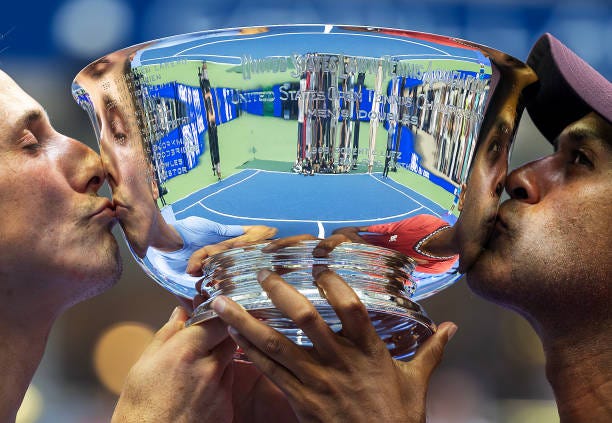
On his wife Zainab Saqib and how they manage the nomadic life of a tennis pro:
We're lucky in the fact that she works completely remotely, so she gets to travel most places. She works in a fertility benefits company called Progeny. She got the job in 2021, so she's been able to still find a balance where she doesn't feel like she's just kind of following me around. Because she actually has her own work to do wherever we are, which is great for her, because she's got something that is hers and her own. But she can do her work from wherever she needs to in the world. So that also helps, because we don't have to be apart for crazy lengths of time. We manage that pretty well, and it's been a pretty important thing, because I think otherwise it would be really hard.
On his concerns about the ATP changes to doubles with more slots for singles players and accelerating the pace of play:
I am quite concerned for the next generation. I'm old enough to remember 2005 and 2006 when I first turned pro. There was this whole thing going around about doubles not being the product that it needs to be and all of the same narrative that we're hearing now. The solution was more singles guys need to play, and it needs to be shorter length of time. So at the time, the ATP allowed singles players to enter doubles tournaments using their singles ranking and cut matches from two out of three full sets to two no ad sets with a 10-point breaker. Twenty years later, we're hearing the exact same narrative. Doubles isn't the product it needs to be. It doesn't bring in any funds. No one buys a ticket to watch doubles. So what's the answer? It's a bit of the same thing. Let's get more singles players to play, and let's cut time by cutting time between points, cutting time on changeovers. We need to keep matches short, and that's what broadcasters seem to want. My opinion is it didn’t obviously really work in 2005 because we're dealing with the same exact issue now. So why are we trying the same solutions again?
On the flip side, we've had some great stories in doubles over the last couple years. For one Mate Pavic winning the French Open, completing the career golden slam. The guy's got every slam. He's got a gold medal. He's got a Davis Cup trophy. To me, that should be celebrated as one of the best achievements we've had in tennis. And to be very honest with you, if I didn't follow him on Instagram and see it on his own Instagram page, I wouldn't have even realized. I think that's a big, big problem. Doubles, we get paid 20% of the prize money, which is effectively 20% of the business. But I don't feel like we're getting anywhere near 20% of the effort from the tour in terms of marketing and visibility. If the people know who the players are, they're going to be interested to watch them play. There is plenty of content, and plenty of stories to promote.
On some solutions the doubles players would support:
One thing that's been talked about a little bit is, after a doubles match you have a couple of fans come out and we hit a few balls with them. Make it more interactive. All the doubles guys would be willing to do some of that. Maybe we could do pro-ams, like golf, where there is more interaction with the fans. I've run a few of those for my foundation for fundraising events. They've been great, not only for creating a personal connection but for people to see the genuine skill level that the players possess.
On still being anchored in his hometown of Carmel, Indiana:
It is unusual for a pro tennis player. But I'm telling you, it’s one of the things that's really kept me sane. We travel all the time, and I so appreciate my time at home just because it's almost like a reset, a recharge. It's not the place with the best tennis players. It never was. But that was secondary to me. It gives a sense of normalcy to this crazy, abnormal life that we lead.
On when he will retire:
I feel like it's one of those things for me that when it happens I'll just know. I'm not sure what it's going to look like, but I have a feeling that competing, every part of it, will not be as fun as it used to be, and then I'll know it's just time to move on and do something else. Because tennis has always been a source of enjoyment for me. Nothing else.
I much prefer watching doubles to singles! It’s faster-paced and more exciting, and the matches are shorter (my attention span doesn’t last five hours…). Also (at least at Indian Wells) you can get a great seat and feel almost like you’re on the court with them. I have great respect and admiration for the doubles specialists.
the diminishment of doubles greatly saddens me